5 Motivations For Your Character to Cross the Road
We all know our characters actions need to be guided by some sort of motivation. A character that simply reacts gets frustrating, and characters that have no logical consistency are usually unbelievable. So here’s the question for your character. Why would they cross a road?
My 5 suggestions:
1. Greed – They realised that by crossing the road there was something in it for them. Either something waiting for them or something to be gained. Either way, greed is a powerful motivator and most characters would cross a road for it (some would cross deserts, mountains, or outer space for it).
2. Love – Isn’t that sweet? Their true love is on the other side or they will prove their love by crossing. Doesn’t matter, either way, love is a powerful motivator.
3. Loss – Someone who has lost their way or lost a love one may cross the road just wondering whether the other side offers them anything to take away the pain. Or they may have made a promise to someone who is now gone and crossing the road will help them keep it.
4. Curiosity – Not such a good motivator because usually it is used when there is no good reason for characters to act in a certain way and so they ‘just want to see’ something. Still, if you’ve established your character as someone who likes to stick their nose into other people’s business you can probably make curiosity work.
5. The next logical step – If your character is on route somewhere then crossing the road might simply be the next logical step on their journey.
The point being here that characters need a reason to do things and as long as you, the writer, are clear about why they are doing something and it makes sense to the audience, everyone will end up happy. We usually don’t wonder why our characters cross roads but the same could be said of opening a door, running up a flight of stairs, taking that trip somewhere, or any of the other decisions our characters have to make.
What is your answer? Why would your character cross the road?
Visiting Susan Whitfield today
My next stop on the tour is on Susan Whitfield’s blog – hop on over and have a read.
Tomorrow I’ll have a post up here in the realm and then on the 18th, I’m over on Jemi’s blog looking at making fantasy unique.
Thanks all for the continued support on the tour.
Permalink Comments Off on Visiting Susan Whitfield today
Guest Post from Carol Kilgore
Note from Cassandra: Thanks Carol for hosting me on your blog today and for your excellent post here. I hope everyone enjoys reading your words of wisdom.
POP GOES THE WEASEL
First of all, I want to thank Cassandra for offering me this opportunity to be a guest on her fantastic blog. I always learn from her posts. Today I’m a virgin – this is my first ever time to write a post for someone else’s blog. It’s a little frightening. So here we go, sink or swim.
“Pop Goes the Weasel” is a song most of us learned before we could string more than two words together – as soon as we could master the crank on the side of the Jack-in-the-Box. We watched Mommy turn it, Daddy, big sister. We knew what was coming.
The clown popped out, and we jumped and squealed. We couldn’t wait for them to push the clown back in and make it jump out. “Again! Again!”
Then it was our turn. We turned it fast, we turned it slow, we mixed it up. Again and again.
When we were two, this was thinking outside the box.
We passed the Terrific Terrible Twos a long time ago. Now most of you reading this are writers.
Today, thinking outside the box means something a little different from Mr. Jack. We still have the familiar set-up, but the outcome is . . . outside the box. Now when we turn the crank, maybe the box explodes. Or the clown is a girly fish dressed in sequins with a pink feather boa around her neck and wearing bright red lipstick. Or we have to put the box together like a puzzle to hear the song. Or we start with the clown outside, turn the crank, and he returns to the box.
The same with our writing. Thinking outside the box applies to every aspect of a novel – character, conflict, dialogue, setting, tone, point of view, plot, theme, and so on.
Instead of your protagonist being a firefighter, maybe he’s a special hot-spot firefighter who gets called out on wildfires. Or maybe he’s a dragon and a rookie in the Dragonopolis Fire Department who always needs to be careful not to start fires of his own when he sneezes or laughs or becomes angry.
Thinking outside the box takes many forms. That’s the beauty. The possibilities are endless.
What’s your favorite way to think outside the box?
~

Carol Kilgore is a Texas writer living in San Antonio. She writes mystery and suspense with a little romance to tingle your tootsies. Her blog, Under the Tiki Hut, is a positive spot for readers and writers to meet, relax, and exchange ideas and dreams.
Visiting Thoughts In Progress Today
Hi all, I’m over on Mason’s blog, Thoughts In Progress today. Hop on over and have a look. If you’ve missed any of the stops on the tour the links are below.
September Tour So Far:
September 1st – Working my Muse
September 2nd – Misanthropolgy 101
September 4th – Like a Bowl of Oranges
September 7th – Sonya Clark
September 9th – The Rhapsodist
September 12th – Diamond – Yup, Like the Stone
September 13th – Alex J Cavanaugh
September 14th – Thoughts in Progress
And now that you are all caught up, remember I’ll be over on Carol’s blog tomorrow and she’ll be popping in here.
Still a lot of stops to go.
Guest blog with Alex J Cavanaugh
Note from Cassandra: Thanks Alex for hosting me on your blog today and thanks for your guest post here on the realm. I hope everyone enjoys reading your thoughts.
In Tune with Writing
Every writer needs inspiration. We can envision a great story, but if we’re not inspired as we write, it falls into the neglected pile of incomplete projects. How do we maintain motivation for our characters and scenes?
It’s no secret I’m a music lover. Music moves me on every level. It uplifts me when I feel down or depressed. Music channels my anger when rage threatens to get the better of me. Since music affects my mood, I decided to use that to my advantage when writing.
Every scene possesses a mood. An action scene contains tension. A tragic scene boasts angst. A love scene… well, that one’s obvious! But regardless of the moment, there’s atmosphere and mood in every scene we create.
This is where music comes into play. A soundtrack sets the tone in movie; the tempo dictates the pace and flow of emotion. It can do the same for our writing. I always listen to music when writing, selecting the best composition for each scene.
When I need to amp up the tension or focus on an action heavy scene, I select something heavy and fast. The rapid tempo conveys a sense of urgency and helps me to focus on a dire situation. The music magnifies the moment. I pour the resulting energy into my words, letting the rhythm carry the story. As an added bonus, I write faster as well.
For emotionally charged scenes and intense character interactions, I select music that fits the mood. It can be slow or fast, but it must stir the emotions. The feelings provoked by the music help me channel a character’s frustration, despair, or jubilation into coherent phrases and words. I connect on a more personal level with my characters, adding depth to their personalities.
Music allows me to feel what I am writing. It places me in the scene and inside my characters’ heads. If you’re seeking inspiration or connection with your work, try music. It helps me stay in tune with my writing!
Alex J. Cavanaugh
Website: http://alexjcavanaugh.blogspot.com/
Note from Cassandra: By the way, if you don’t know, Alex’s first book is going to be released in October. Check out the details and the trailer here.
Guest Post from Laura Diamond
Note from Cassandra: I’m over on Laura’s blog today but she has come to visit us here in the realm to tell us about her writing schedule. Thanks Laura for being here today. After you check out her post here, hop on over to Laura’s blog to check out my post for today.
****
Gosh, I’m so excited to be a part of Cassandra’s blog tour. What an exciting month, right? Cheers, Cassandra, for all the hard work you’ve put into organizing this international writer fest!
I’ve been asked countless times about how I squeeze writing into my schedule. I’m going to preface this with a disclaimer. You see, I think my answer is a non-answer, but it’s the reality. Okay, drum roll, please!
I don’t schedule writing time. Nope. I don’t.
Why? Because if I did, I’d feel pressure to write, no matter the quality or topic. For me, pressure creates angst and frustration. Angst and frustration actually makes me freeze up. I get too caught up in things like: What should I write about? What if it sucks? What if I can’t find the right words? What if it doesn’t turn out the way I want it?
Notice most of those questions have a negative connotation. SO not cool. Once the negativity wheel starts spinning, I dig myself deeper and deeper into a rut and my writing stagnates like a 1000 year old bog. Stinky. Yuck.
So I don’t even go there.
Sure, I still have goals and I still work really hard to obtain them. For the most part, I do get some writing in every day, but I don’t go all ballistic and start berating myself if I don’t. I trust myself and my brain that the right words will come out if I let them come at their own pace.
Yes, it’s true that I will go days, sometimes weeks, without writing. And that’s okay. Because my brain is still processing things even if I’m not actively thinking about it. I can tell because when I DO sit down to write, the magic happens. An idea strikes. A dialogue snafu gets smoothed. A plot hole gets filled in.
It all works out.
That being said, everybody develops their own strategy to apply to their writerly life and I’d LOVE to hear your routine for writing!
**********
Laura is a board certified psychiatrist and hopes to become a published author. She writes adult and young adult urban fantasy, fantasy, and dystopian fiction. Her blog: Diamond, Yup, Like the Stone http://lbdiamond.wordpress.com/.
What Began As A Rant
I actually did have a post planned for today just before I jump into a fairly extended stretch on my blog tour. Incidentally the next five days I will be bouncing all around the place and I hope you will come with me to some amazing blogs (links below). However, I re-read my post and realised that what had begun as a discussion about why I had been disappointed by a trilogy I recently gave up reading had actually degenerated into a rant and I decided to scrap it and try again.
Here is my second attempt.
I recently began reading a trilogy of YA fantasy books and was instantly hooked by the first book. There was this interesting (if a little generic) female protagonist who did some reasonably unexpected things and over the course of the first book I came to really want her to succeed in her goals. The villains were a bit on the melodramatic side and their scheme was clearly delusional and set to fail before it began but you can forgive that in YA because overblown villains are the norm and when stupid people reach for the moon, of course they fail. The story was enjoyable and the side characters well fleshed out.
Enter book two and we see our heroine in a new location only now she’s less interesting because she has nothing left to reveal and this time the actual complication of the story isn’t introduced until half-way through because they are so busy trying to get us to see the protagonist in the new location. Instead of some dark past haunting her every step, we now have petty annoyances and domestic squabbles that fill in time until somehow there just happens to be a serial killer stalking around in her new home and somehow she just happens to be the one who is going to solve everyone’s troubles. Not that she isn’t out of her depth and completely lost and with no actual reason to involve herself at all. In point of fact, the author spends a bit of time trying to convince us that she becomes emotionally attached to one of the almost victims, but this doesn’t really sit right with the protagonists character and ends up just being a plot pointer.
By book three, I was more or less over the protagonist. However, in the grand tradition of trilogies, the danger is now upped to the point where it is so overblown and melodramatic that you fully expect the sky to darken at any minute. And yet, I just didn’t care. The characters of the first book were now mostly too far removed because they had all but been completely absent (other than a tokenistic appearance) in the second. The characters of the second book hadn’t endeared themselves to me at all. And the third book seemed determined to rush us into a complication that made very little sense as fast as possible.
I’m going to point out at this stage that I didn’t finish reading the trilogy. I made it half-way through the third book and then realised I was hoping that mysterious, overblown, master-mind villain guy would just wipe them all out and call it a day. At that point I realised that I’d completely disengaged from the story and there was no point in my finishing it.
The point of this was my wondering where it all went wrong. The first book won me over. I loved it. I was totally hooked into this world and these characters. In all honesty, I think it was the big shift in scenery that lost me. I loved the world that was created in the first book, but in the second we were in an entirely different setting and I didn’t really feel it. I missed too much of the first setting. Perhaps that is a petty quibble but as a reader it threw me.
So my question to the readers out there is this: How long will you read when you know you have disengaged? Do you give up straight away, or do you plow on and hope for a big finish?
Tomorrow Laura Diamond is sharing a post here on the realm and I am off to her blog to talk about females in fantasy writing.
After that I am visiting Alex J Cavanaugh on the 13th, Mason Canyon on the 14th, Carol Kilgore on the 15th and Susan Whitfield on the 16th. Hope to see you on the tour.
Busy Times In the Blogosphere
Okay, I really don’t like the word blogosphere, but it is apt for describing the network of writing blogs out there. And these are busy times.
I’ve been busy planning my blog tour but I’m starting to get back out there and find out what other bloggers are up to. Let me know if you have an event coming up. I know a few of you have books about to be released and there are several blog fests I’ve been wanting to check out. Two notable events that are coming up:
Talli Roland is calling for people to help her take on Amazon and she is looking for bloggers willing to help out on December 1st. I think she might be a tad ambitious in aiming for 1000 but if we all get behind her, she might just make it.
Alex J Cavanuagh is calling for people to join the Top Ten TV shows blogfest on the 20th of September. I’m a little busy this month but I am definitely looking forward to reading some of the contributions to this blogfest.
Let’s help Talli and Alex out and let me know if you’ve got something coming up.
Guest Post from Alex Willging

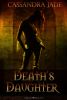
First things first, I have to thank Cassandra for this opportunity to write a guest post on her blog. I’m an admirer of her writing style and I thoroughly enjoyed her novel, Death’s Daughter (a review of which can be read on my own blog, The Rhapsodist).
As an amateur reviewer and aspiring writer, I’ve gone into quite a few stories over the years—short stories, novels, TV shows, films, and even a few video games. Some of these stories entertained me, some of them were thought-provoking, and a fortunate few were able to do both. And there were more than a few stories that didn’t really grab me at all.
I’ve had some time to think about this matter and the conclusion I’ve reached is that it helps to really know the premise of your story and flesh it out as best you can.
It’s all too easy to have an idea. You’re sitting there, minding your own business, and then wham! You can see it all in your mind’s eye—the protagonist, the antagonist, the conflict, the setting. And you go to your notebooks or your computer to start to writing it all out… and you realize it’s not the best thing you’ve ever done. The premise is kinda cool, maybe you’ve got a few bits of dialogue that are too hilarious not to be used, but not much else stands out.
So you stick it in your drawer or save your notes on your hard drive, and go back to the rest of your life.
I think some of the best stories are built off those randomly-written notes. You start collecting them after a while and maybe you begin to mix and match things up—the hero in this story idea is now the villain in another concept, the sidekick maybe gets some real development, and you might jump through ten thousand different genres and sub-genres before you find something you really like.
Revision is a painful process, but it wouldn’t hurt if it didn’t care about producing your best material. And I can think of so many stories I’ve read or experienced where it seems like the author didn’t want to bother with a second or third draft. However, if you don’t put yourself through the misery of producing a really good story, you just might be giving that pain over to your readers, who’ll be miserably picking their way through your tale, trying desperately to understand what’s going on.
But how will you know what’s your best story? Well, that’s something every writer has to decide for himself or herself. You might produce ten thousand non-starts before you hit on the One Good Idea that forms the heart of your best work. It will be whatever gets you writing more and writing better. And when you reach something like that, you can sit back and smile, basking in the glow of your creation.
Just don’t smile for too long, because then come the editors, the literary agents, and those critical readers who will tear your beloved work to shreds. And your cycle of pain and beauty begins all over again, and again, and again…
Note from Cassandra: Thanks Alex for your wonderful post today, and for all your support with Death’s Daughter. And thanks for hosting me today as I continue my blog tour.
Trailer for Radiance
This is the trailer for Radiance, the first book in the new middle grade ‘Radiance Series’ by Alyson Noël. Alyson expands her ‘Immortals’ story by giving Ever’s little sister, Riley, her own brand-new series.
More about ‘Radiance’:
Riley has crossed the bridge into the afterlife—a place called Here, where time is always Now. She has picked up life where she left off when she was alive, living with her parents and dog in a nice house in a nice neighborhood. When she’s summoned before The Council, she learns that the afterlife isn’t just an eternity of leisure. She’s been assigned a job, Soul Catcher, and a teacher, Bodhi, a possibly cute, seemingly nerdy boy who’s definitely hiding something. They return to earth together for Riley’s first assignment, a Radiant Boy who’s been haunting a castle in England for centuries. Many Soul Catchers have tried to get him to cross the bridge and failed. But all of that was before he met Riley . . .


 Cassandra Jade in the Realm